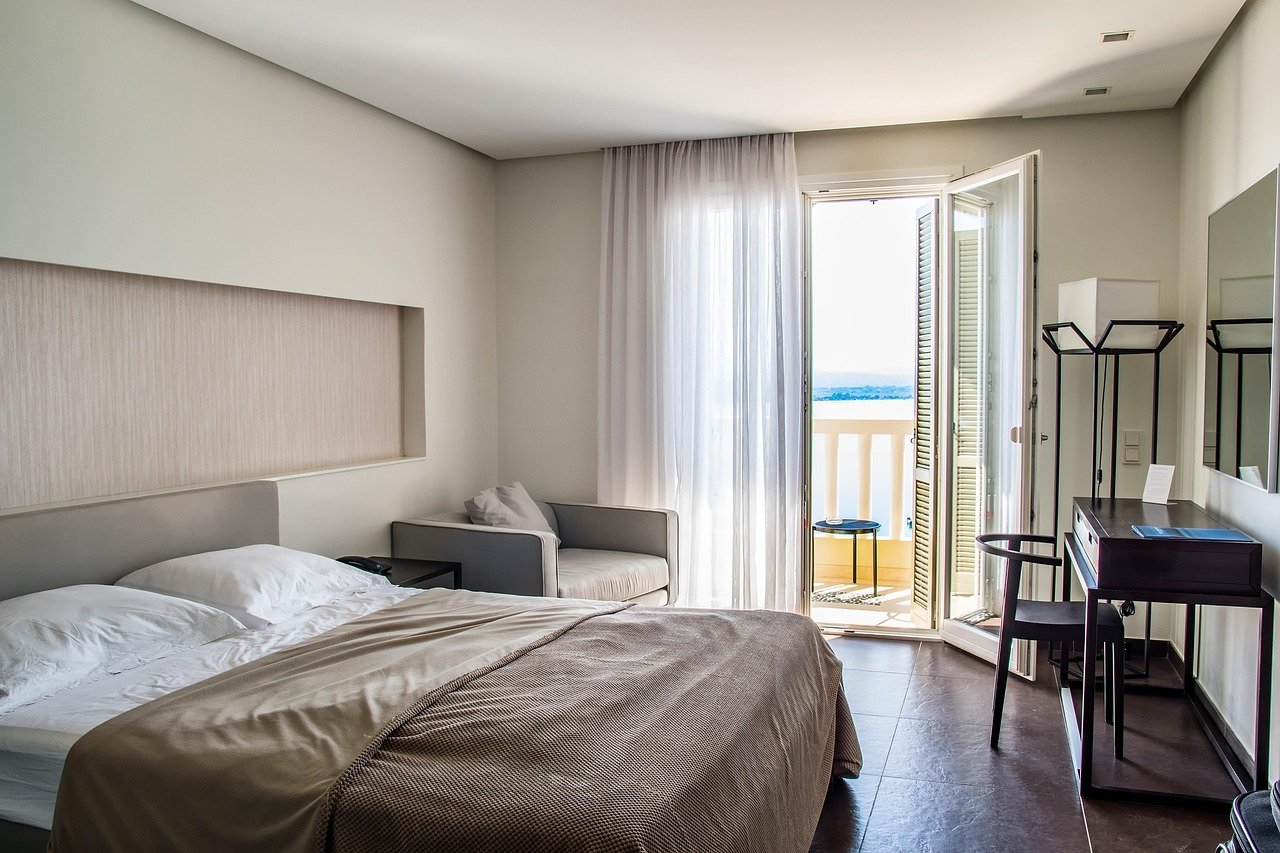
When travelers sit down to construct a budget for their next international adventure, two line items almost always dominate the spreadsheet: long-haul flights and accommodation. While flights are a massive upfront cost, accommodation is a relentless daily drain on your wallet. A $150-a-night hotel might seem reasonable for a 3-day weekend getaway, but stretch that over a 14-day international trip, and you’re staring at a $2,100 bill before you’ve even bought a single meal or museum ticket.
The standard advice for budget accommodation usually boils down to entirely sacrificing comfort: "just sleep in a 16-bed mixed hostel dorm." While hosteling is fantastic for social experiences and minimizing costs, it is not sustainable for everyone-especially older travelers, digital nomads needing focus, or couples seeking privacy.
This comprehensive, 2,000+ word guide is designed to move beyond the classic "stay in a hostel" advice. We will explore 15 creative, deeply practical, and occasionally unconventional strategies to drastically reduce your accommodation expenses globally without compromising your safety or fundamentally sacrificing your comfort.
The Foundation: Rethinking the Traditional Hotel Model
To save money, you first need to understand the structural inefficiencies of standard booking. When you book a room at a Marriott, a Hilton, or a boutique city-center hotel, you are not just paying for a bed. You are subsidizing the 24/7 reception desk, the extensive breakfast buffet infrastructure, the daily housekeeping staff, and the massive marketing budgets of corporate chains.
If you don't utilize a 24-hour concierge or have your bed made every single day, you are overpaying. Here is how to strip out the excess.
Strategy 1: House Sitting (The Free Accommodation Hack)
House sitting has exploded in popularity, transitioning from a niche hippie concept to a highly organized global network. Platforms like TrustedHousesitters, Nomador, and MindMyHouse connect homeowners looking for someone to care for their pets and property while they are away with travelers looking for free accommodation.
- The Cost: $0 per night (after paying a small annual platform membership fee of ~$130).
- The Trade-off: You must actually care for the animals (walking dogs, feeding cats, giving medication) and respect the house rules. Your travel dates must also align perfectly with the homeowner's vacation dates.
- Best For: Slow travelers, animal lovers, and locations like the UK, Australia, and North America where the practice is highly popular.
Strategy 2: The "Apart-hotel" Sweet Spot
An apart-hotel (or serviced apartment) occupies the golden middle ground between an Airbnb and a traditional hotel. Companies like NUMA, Locke, and Roam offer hotel-quality beds, fast Wi-Fi, and small kitchenettes-but they entirely eliminate the front desk. Access is usually granted via a PIN code to your smartphone.
- The Savings: By automating check-in and skipping daily maid service, these properties often run 20% to 30% cheaper than equivalent traditional hotel rooms in the exact same neighborhood. Furthermore, having a kitchenette saves you profound amounts of money on breakfasts and coffees.
Strategy 3: Academic Housing and University Dorms (Summer Only)
During the summer months (typically June through late August), thousands of universities across Europe and North America empty out as students return home. rather than leaving these massive dormitories empty, universities rent them out to tourists at aggressively reduced rates.
- The Benefit: University housing is almost always universally located in extremely central, vibrant neighborhoods (think Central London, Dublin, or Boston). The rooms are spartan but clean, safe, and usually feature access to large communal kitchens and affordable campus cafeterias. Sites like UniversityRooms.com aggregate these listings.
Strategy 4: The "Blind Booking" Strategy (Priceline/Hotwire)
If you have flexibility regarding exactly where you sleep and only care about the star rating and general neighborhood, "Opaque Booking" or "Blind Booking" is incredibly lucrative. Platforms like Hotwire (Hot Rate Hotels) and Priceline (Express Deals) offer massive discounts (up to 50% off) on premium 4- and 5-star hotels. The catch is that the name of the hotel is hidden from you until your non-refundable credit card payment clears.
- The Hack: Savvy travelers use tools like the "BetterBidding" forums or Chrome extensions to cross-reference the exact amenities, location, and star rating provided in the blind listing to accurately deduce exactly which hotel they are booking before they pay.
Strategy 5: Avoid the Airbnb Cleaning Fee Trap
Airbnb used to be the undisputed king of budget travel. Today, an $80/night listing often balloons to $160/night once the platform service fee, local taxes, and exorbitant host "cleaning fees" are applied.
- The Strategy: Airbnb is now mathematically terrible for short stays. The cleaning fee is fixed whether you stay for 1 night or 14 nights. Therefore, only use Airbnb or VRBO for stays of 5 nights or longer, where the one-time cleaning fee gets amortized across multiple days, bringing the true nightly cost down significantly. For 1-to-3 night stays, a standard hotel is almost always cheaper.
Strategy 6: The Direct Booking Negotiation
OTAs (Online Travel Agencies) like Booking.com and Expedia charge independent hotels a massive commission-often between 15% and 25%.
- The Tactic: Find a small, independent guesthouse or boutique hotel you like on Booking.com. Look up their official website and email or call them directly. Say: "I see your room for three nights on Booking.com is $450. I know they charge a large commission. If I book directly with you over the phone, can you do $380, or perhaps throw in free breakfast?" Eight times out of ten, independent hoteliers will eagerly agree to cut out the middleman.
Strategy 7: Workaway and WWOOFing
If you have more time than money, volunteering your labor in exchange for room and board is a deeply enriching way to travel. Workaway connects travelers with hosts globally (from eco-lodges in Costa Rica to language schools in Spain) requiring 4-5 hours of help a day in exchange for a bed and 3 meals. WWOOF focuses specifically on organic farming.
- The Cost: $0 per night.
- The Trade-off: You are literally working. This is not a vacation; it is a cultural exchange.
Strategy 8: Monasteries and Convents (Italy & Spain specifically)
In heavily Catholic countries like Italy and Spain, centuries-old monasteries and convents have long offered shelter to traveling pilgrims. Today, many have opened their doors to regular tourists.
- The Benefit: You stay in stunning, deeply historic architecture right in the center of cities like Rome, Florence, or Seville for a fraction of hotel prices (often $40-$60 for a private room). The revenue goes directly to supporting the religious orders or their charities.
- The Catch: There is almost always a strict curfew (usually 10 PM or 11 PM). If you are looking for nightlife, this is not the option for you. Sites like MonasteriesStays.com facilitate these bookings.
Strategy 9: Overnight Transit
If you need to move from City A to City B, doing it while you sleep effectively kills two budget items with one stone.
- The Execution: Instead of paying $100 for a hotel and spending the entire next daylight day on a 6-hour train, take a night train or a long-distance night bus (like FluxBus or Megabus). You optimize your daylight hours for sightseeing and save the cost of a night's accommodation. Yes, you will likely be tired, so plan a highly relaxed "recovery" itinerary for the following day.
Strategy 10: Private Rooms in Hostels
Hostels aren't just dorms. The vast majority of modern, highly-rated European and South American hostels offer beautiful "Private Doubles" with en-suite bathrooms.
- The Benefit: You get the absolute privacy of a hotel room, but you retain access to the hostel's massive commercial kitchen (saving you money on food), the cheap on-site bar, and the built-in social environment for meeting other travelers. Private hostel rooms are usually priced about 20% cheaper than equivalent 2-star hotels.
Strategy 11: Travel in the Exact "Shoulder" Week
Everyone knows not to travel to Europe in July. It’s expensive and hot. But "Shoulder Season" is often vaguely defined.
- The Tactic: The most dramatic, violent drop in accommodation pricing occurs exactly during the transitional week when schools resume. Research exactly when the local public schools in your destination country return to session in September, and book your trip for that specific week. Prices for coastal properties in Italy or Greece often drop by 40% literally overnight, while the weather remains spectacular.
Strategy 12: Home Exchange (Swapping)
If you own a home, or even rent an apartment in a desirable city, HomeExchange is revolutionary. You "swap" your house with a family in another country. You stay in their Parisian flat while they stay in your Chicago condo.
- The Savings: Infinite. You pay absolutely nothing for accommodation. You also get a full kitchen, a washer/dryer, and local neighbors. This fundamentally alters the economics of a family vacation from $5,000 to just the cost of flights.
Strategy 13: Leverage Business Hotel Emptiness (Weekends)
If you are traveling to a major financial hub (Frankfurt, the City of London, downtown Tokyo, or New York's Financial District), hotel occupancy is highest from Monday to Thursday. Once the corporate executives fly home on Friday afternoon, the hotels empty out.
- The Tactic: Business hotels radically slash their prices for Friday, Saturday, and Sunday nights to fill rooms. Use this to your advantage by aligning your high-end city weekends with these corporate dead zones.
Strategy 14: Use Local, Geo-Specific Booking Engines
Booking.com is globally dominant, but in certain regions, local alternatives have vastly superior inventory and cheaper negotiated rates because they dominate the domestic market.
- Asia: Always cross-reference prices with Agoda. Agoda consistently drastically undercuts western OTAs in Thailand, Japan, and Vietnam.
- Latin America: In more remote areas, Despegar often has listings for local pensiones that simply don't exist on American websites.
Strategy 15: The VPN Geolocation Pricing Hack
Pricing algorithms on travel booking sites attempt to dynamically charge you the absolute maximum amount they calculate you can afford based on your location and browsing history. A user connecting from a MacBook Pro in a wealthy ZIP code in San Francisco is often quoted a higher price for the exact same hotel room than a user connecting from an IP address in Argentina.
- The Tactic: Clear your browser cookies entirely, open an incognito window, and use a reliable VPN to route your internet connection through a country with a weaker currency (like India, Mexico, or Argentina). While not guaranteed to work every time, the resulting localized pricing can occasionally yield 15-20% discounts on major booking aggregator platforms.
Conclusion
Cutting accommodation costs is the single most effective way to extend your "runway" while traveling. By shifting away from the rigid structure of traditional hotels and embracing alternative models-whether that involves feeding someone's cat, sleeping in a medieval monastery, or strategically negotiating directly with owners-you can drastically reduce your budget and simultaneously experience a far more authentic side of your destination. Keep exploring our Total Trip Cost budget guides for more deep-dive strategies into cost-efficient global travel.
Stop guessing your travel budget
Use our free calculator to get real flight prices and daily cost estimates for over 500 cities worldwide.
Travel smarter, not harder.
Join 10,000+ readers getting exclusive budget travel hacks, flight error fares, and location guides every Tuesday.
We respect your privacy. Unsubscribe anytime.