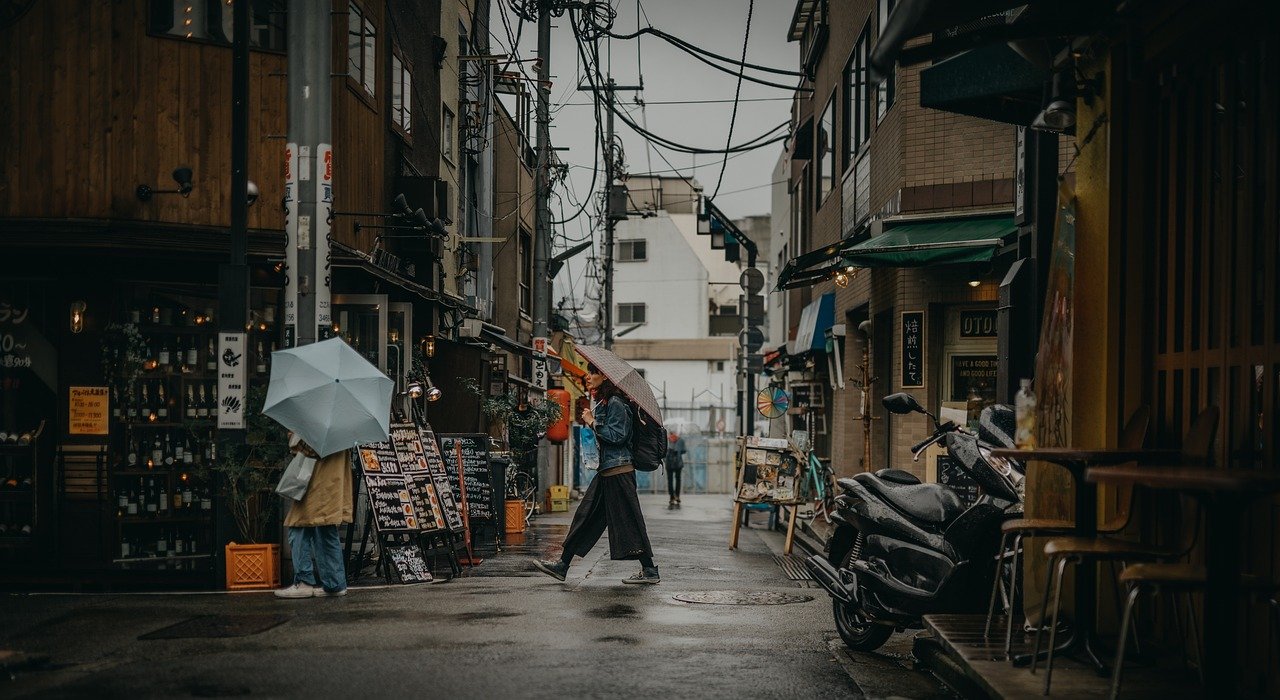
Mentioning a trip to Japan to a veteran backpacker often elicits a sympathetic wince. Throughout the 1990s and 2000s, Tokyo’s staggering real estate prices and hyper-developed economy fostered a notorious reputation: Japan was visually stunning, culturally unparalleled, and brutally, undeniably expensive. It was a destination strictly reserved for wealthy vacationers or executives on massive expense accounts.
In 2026, the narrative has fundamentally shifted.
A decade of stagnation, a heavily weakened Yen against the US Dollar and Euro, and the deep proliferation of budget travel infrastructure have completely altered the Japanese travel experience. While an evening in an ultra-premium Michelin-starred sushi counter in Ginza will still obliterate your finances, the baseline cost of traveling Japan is now astonishingly affordable. In fact, for the savvy traveler, Japan is currently cheaper than the vast majority of Western Europe.
In this granular 2,000-word financial teardown, we analyze exactly how to travel Japan on a budget, breaking down the massive fixed costs, the culinary hacks, and the transit strategies necessary to thrive in the Land of the Rising Sun.
The Foundation: Currency and The Yen Depreciation
Before planning your budget, you must acknowledge the massive macroeconomic advantage tourists currently hold. Historically, 100 Japanese Yen equated to roughly $1.00 USD. For years, the conversion math was a simple 1-to-1 mental exercise.
However, the rapid depreciation of the Yen in the 2020s has resulted in an incredible, sustained 30-to-40% discount for anyone holding Dollars or Euros. A ramen bowl that costs 1,000 Yen is no longer $10. It is closer to $6.50. This singular economic shift is the driving force making Japan an accessible budget destination today.
Always rely on the Total Trip Cost calculator, which utilizes real-time API conversion data, to generate your daily Japanese budget estimates.
Category 1: Accommodation (The Deep Sleep Hack)
Western-style, major chain hotels in central Tokyo (Shinjuku, Shibuya) or Kyoto remain relatively expensive (routinely $200+ a night). To optimize, you must embrace the hyper-efficient, uniquely Japanese accommodation models.
1. Business Hotels (Budget: $40 - $70 / night)
Business hotels (like APA Hotel, Dormy Inn, or Toyoko Inn) were explicitly designed for Japanese salarymen who missed the last train home. The rooms are famously small-you will likely not be able to fully open a large suitcase on the floor without hitting the bed. The Advantage: Despite the size, they are impeccably clean, hyper-efficient, usually located within a two-minute walk of a major subway station, and frequently offer excellent free breakfasts and communal "onsen" (hot spring) baths on the roof. They represent the ultimate value proposition for solo travelers or couples.
2. Capsule Hotels (Budget: $20 - $40 / night)
The iconic Japanese capsule hotel is essentially a deeply futuristic hostel. You rent a pod roughly the size of a single bed stacked into a massive wall matrix. The Advantage: Perfect for solo travelers. Modern capsules (like the Nine Hours chain) feel like sleeping aboard a sleek spaceship. Washrooms are luxurious and communal. The Warning: If you suffer from severe claustrophobia, or you are deeply sensitive to the sound of 40 other people opening plastic bags in the dark, avoid them. Furthermore, many classic capsule hotels remain strictly segregated by gender, and some older models do not allow women at all.
3. Ryokans (The Strategic Splurge)
A Ryokan is a traditional Japanese inn featuring tatami mat rooms, futons, elaborate multi-course kaiseki dinners, and private hot springs. They are intensely expensive ($200 to $800+ a night). The Budget Strategy: Do not stay in a Ryokan for an entire week. It will bankrupt you. Instead, book a cheap business hotel for 13 nights of a 14-night trip, and dedicate a single, massively strategic night to a rural Ryokan in the mountains (like Hakone) as your grand cultural splurge.
Category 2: Transit (The Shinkansen Dilemma)
Japan possesses arguably the greatest public transportation network in the history of human civilization. It is spotless, punctual down to the second, and intensely comprehensive. But speed is incredibly expensive.
The JR Pass (Is it still worth it?)
For decades, the undisputed supreme hack for touring Japan was the Japan Rail (JR) Pass. Purchased prior to arrival, it granted unlimited rides on the iconic Shinkansen (Bullet Trains) across the country for 7, 14, or 21 days. However, the Japanese government implemented a colossal, 70% price increase on the JR Pass.
The Strategy: The JR Pass is no longer an automatic "must-buy." For the standard tourist route (Tokyo -> Kyoto -> Osaka -> Tokyo), buying individual point-to-point Shinkansen tickets is now mathematically thousands of Yen cheaper than buying the 7-day Pass. Only purchase the JR Pass if you mapped out an aggressive, high-speed, coast-to-coast itinerary covering vast distances (e.g., Tokyo to Hiroshima to Sapporo).
The Budget Alternative: Willer Express Night Buses
If you truly have zero money, the bullet train is out. A one-way ticket from Tokyo to Kyoto on the Shinkansen takes 2.5 hours and costs roughly $90. Alternatively, the Willer Express night bus takes 8 hours and costs $25. The buses are incredibly modern, featuring privacy hoods that pull down over your face. They run overnight, saving you both the transit fee and reducing a night of hotel accommodation.
Inner-City Transit: Suica / Pasmo
Load a digital Suica or Pasmo transit card onto your iPhone or Android wallet immediately upon landing. A sprawling 30-minute subway ride across the massive Tokyo metropolis rarely exceeds $2.00 to $3.00. Absolutely never take a taxi; a 15-minute cab ride in Tokyo can instantly vaporize $40.
Category 3: The Culinary Paradise (Convenience Stores and Slurp Shops)
Japan is the singular destination on planet Earth where the absolute cheapest food is frequently also the most culturally iconic and delicious.
The Konbini (Convenience Store) Mastery
7-Eleven, FamilyMart, and Lawson in Japan bare absolutely zero resemblance to the sad, fluorescent-lit gas stations of North America. Japanese konbini are the backbone of local society. They offer phenomenal, extremely inexpensive culinary delights.
- Breakfast: Grab an iced coffee, a fluffy egg salad sandwich (they are legendary), and an onigiri (rice ball stuffed with spicy tuna or salmon) for a total of $3.50.
- Dinner: They sell incredibly fresh bento boxes and hot, fried chicken (karaage). The clerks heat it up for you immediately for under $5.
The Ticket Machine Restaurants (Ramen & Gyudon)
Walking around busy areas like Shinjuku or Ueno, you will see small restaurants with a massive, brightly lit vending machine situated outside the front door. These are fast-casual local spots (like Yoshinoya or Matsuya, or independent ramen shops). The Mechanics: You do not speak to a waiter. You insert cash into the machine outside, press the button featuring a picture of the food you want, take the small paper ticket that prints out, walk inside, hand it to the chef, and within three minutes you are eating. The Cost: A massive, steaming, world-class bowl of Tonkotsu Ramen or a Gyudon (beef rice bowl) costs between $4.50 and $7.00. There are zero tips expected or accepted.
Category 4: Entertainment and Hidden Tipping
Tipping is Offensive
We must emphasize this: Do not tip in Japan. The service industry prides itself on providing impeccable, world-class hospitality as a baseline standard. Handing excess cash to a bartender, a taxi driver, or a waiter is not viewed as generous; it is incredibly confusing and highly perceived as an insulting lack of respect for their professional pride. The price on the bill is the exact price you pay. For Americans accustomed to adding 20% to every meal, this instantly reduces your dining budget by a massive margin.
The "Otoshi" (Table Charge)
When you finally decide to visit a traditional Izakaya (a loud, smoky, brilliant Japanese pub) for yakitori chicken skewers and cheap highballs, you might notice a mysterious 300 to 500 Yen ($2.50 to $3.50) charge on your final bill. This is the Otoshi-a mandatory seating fee/cover charge. In exchange for this fee, the waiter brings you a tiny, un-ordered appetizer (like pickled cabbage or edamame) immediately upon sitting down. You cannot refuse the Otoshi. Accept it as the cost of entry.
Cheap Entertainment
Tokyo is a free museum. The sensory overload of walking through the neon canyons of Akihabara at night, crossing the chaotic Shibuya Scramble, or walking the serene, forested paths of the Meiji Shrine costs absolutely nothing. If you want a phenomenal, hyper-elevated view of Tokyo, skip the massively expensive Tokyo Skytree (approx $25). Instead, go to the Tokyo Metropolitan Government Building in Shinjuku; it features twin observation decks 200 meters into the sky that are 100% completely free to enter.
The Final Verdict
If you strip away luxury ryokans, high-speed bullet trains, and omakase sushi dinners, Japan fundamentally restructures itself into a deeply accessible, mid-tier budget destination.
By sleeping in impeccably clean business hotels or futuristic capsules ($40/night), eating flawless ramen from ticket machines and premium sushi from the 7-Eleven ($20/day), utilizing overnight highway buses instead of the Shinkansen, and leveraging the massive Yen depreciation, traveling Japan on a highly comfortable $70 to $90 a day is entirely, effortlessly possible in 2026.
Run your itinerary through the Total Trip Cost platform to lock in the absolute latest flight deals, and prepare to conquer the neon labyrinth.
Stop guessing your travel budget
Use our free calculator to get real flight prices and daily cost estimates for over 500 cities worldwide.
Travel smarter, not harder.
Join 10,000+ readers getting exclusive budget travel hacks, flight error fares, and location guides every Tuesday.
We respect your privacy. Unsubscribe anytime.